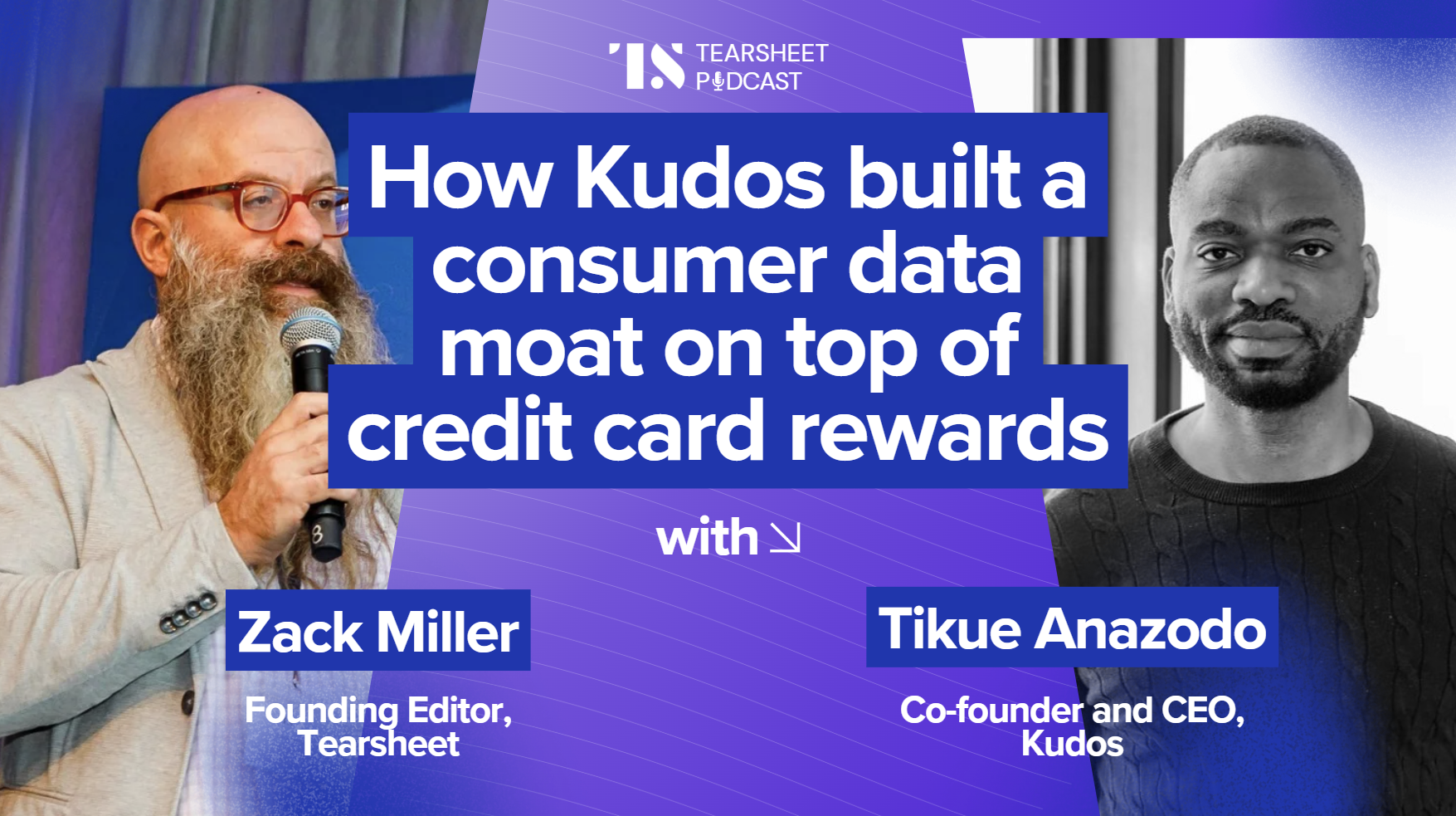
Here’s the thing: 500,000 users. That’s the number. Not for a social network, not for a new gaming app, but for a consumer finance tool that started by simply telling you which credit card to use at checkout. Kudos, a company that’s managed to snag over $17 million in funding and a spot on Forbes’ Fintech 50, has been quietly building something far more valuable than just a rewards aggregator.
They’ve constructed a consumer data moat. A deep, wide one, forged from the digital fingerprints of half a million shoppers. This isn’t just about maximizing points on your latte purchases anymore. It’s about a comprehensive layer of purchase history, credit profiles, and—crucially—active shopping behavior. And as co-founder and CEO Tikue Anazodo explains, this asset is now the engine for a new generation of AI agents that do more than just advise; they act.
The Data Underpinning the ‘Smart Wallet’
At its core, the credit card rewards ecosystem is a labyrinth. Anyone who’s ever stared blankly at a statement, trying to decipher bonus categories for the quarter, knows this. Kudos emerged to solve that problem, offering a smart wallet that guides users to the optimal card at the point of sale, suggests better cards based on spending habits, and even layers on additional rewards. Sounds neat, right? A consumer-friendly solution to a genuine pain point.
But the real story, the one that makes investors sit up and take notice (and why QED Investors is on board), isn’t the user interface. It’s the data architecture that underpins it. Every swipe, every transaction, every card added to the Kudos wallet becomes a data point. Anazodo describes it as building for consumers, not merchants. This user-centric approach, however, has a side effect: it generates an incredibly rich, permissioned dataset about how people spend money.
“We’ve built a financial operating system that allows consumers to unlock the value that banks and card networks are already providing, but they just don’t know how to get it.”
This statement from Anazodo is key. It reframes Kudos not just as a rewards optimizer, but as an interpreter of financial incentives. The AI agents are the natural evolution of this insight.
From Optimization to Automation: The AI Agent Gambit
Now, Kudos is taking that half-million-user dataset and feeding it into AI agents designed to actively manage aspects of your financial life. Think negotiating your bills down, identifying and matching you to superior financial products (beyond just credit cards), and executing transactions on your behalf. This moves Kudos from a passive tool to an active financial proxy.
This strategy is a textbook play in the modern fintech playbook: acquire users with a tangible, immediate benefit (rewards optimization), then use the resulting data to build more complex, high-value services. The data moat isn’t just about knowing which card to use; it’s about understanding spending patterns deeply enough to predict needs, negotiate terms, and even act autonomously.
Is this a defensible moat? The barrier to entry for a basic rewards aggregator is low. But replicating Kudos’s dataset—a blend of transactional history, creditworthiness indicators, and real-time purchasing intent—is significantly harder. Especially when coupled with the AI models trained on that data.
The Market Dynamics and Future Trajectory
We’ve seen similar data-centric plays before, often in B2B contexts, but Kudos is squarely focused on the consumer. The implications here are significant. If these AI agents prove effective, Kudos could become the central nervous system for a user’s financial interactions, much like an operating system for a computer. It’s a bold bet on the maturation of AI and the consumer’s willingness to cede more control for tangible financial gains.
This also raises questions about data privacy and security, naturally. But for Kudos, the value proposition hinges on trust and demonstrable results. The $17 million raised is a validation of this vision, but the true test will be in the execution and the long-term engagement of those 500,000 users.
They’re not just collecting data; they’re building intelligence. And in the cutthroat world of fintech, intelligence—backed by a strong data moat—is the ultimate currency.
Why Does This Matter for Fintech Innovation?
The Kudos model represents a critical shift in how fintechs are thinking about user acquisition and value creation. It’s a move away from single-purpose tools towards integrated, intelligent financial platforms. By starting with a relatively low-friction product like rewards optimization, Kudos has sidestepped the high-stakes regulatory hurdles that plague many other fintech ventures. Yet, by accumulating such rich behavioral data, they’ve positioned themselves for expansion into more regulated, higher-margin areas like lending and financial advice.
The underlying principle is sound: a deep understanding of consumer financial behavior is the key to unlocking a multitude of services. The question isn’t whether this data is valuable, but how Kudos will continue to ethically and effectively deploy it. The AI agents are just the first step in what could be a much larger play to become an indispensable financial partner for everyday consumers.
🧬 Related Insights
- Read more: AI Isn’t Just Coming for Your Job, It’s Remaking the Financial OS
- Read more: Banks Warn Clarity Act Stablecoin Rules Open to ‘Evasion’
Frequently Asked Questions
What does Kudos actually do for consumers? Kudos acts as a smart wallet, helping consumers choose the best credit card for each purchase at checkout, recommending cards based on spending habits, and layering additional rewards on top of existing card benefits. They are now expanding to offer AI agents that can negotiate bills and match users to better financial products.
How has Kudos accumulated so much user data? Kudos has gathered data by offering a service that optimizes credit card rewards, requiring users to link their credit card accounts and allowing the platform to track purchase history and spending behavior across approximately 500,000 users.
Will Kudos’s AI agents replace financial advisors? Kudos’s AI agents are currently focused on specific tasks like bill negotiation and product matching, not comprehensive financial planning. While they offer advanced automation for certain financial needs, they are unlikely to fully replace the personalized advice and strategic planning offered by human financial advisors in the near term. Their aim is more to augment and simplify financial tasks.