$2.85 billion. That’s Solana’s annual revenue run rate, announced this month — a staggering figure for a blockchain protocol that’s turned heads even in a choppy crypto market.
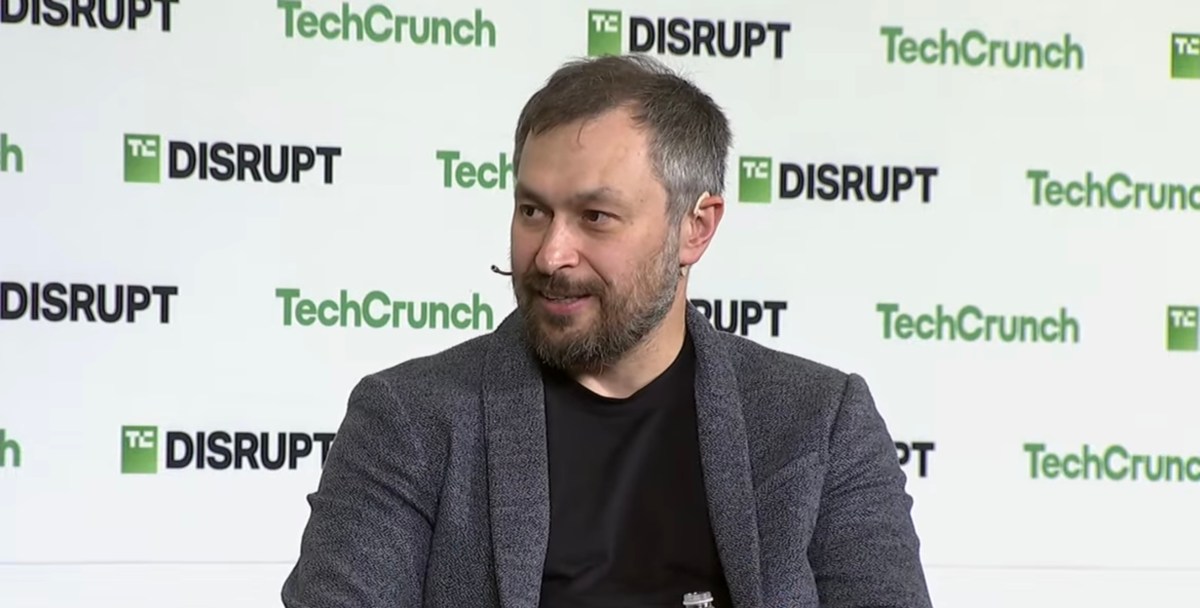
And right on the heels of that bombshell? The launch of Solana’s first ETF by Bitwise, pulling in $70 million in a single day. Anatoly Yakovenko, the co-founder and CEO, took the Disrupt stage basking in this glow, but his real passion poured out elsewhere: agentic coding tools.
Yakovenko, a 15-year software engineering veteran, has gone from hands-on architect to AI overseer.
“AI has been a great force multiplier for somebody who’s an expert,” said Yakovenko, describing his experience with agentic coding after more than 15 years developing software. “Now I can just watch Claude churning through its thing and I can almost smell when it’s going off the rails.”
“If people are in a meeting with me and I’m not paying attention,” he continued, “it’s because I’m watching Claude.”
Claude — Anthropic’s powerhouse LLM — isn’t just a sidekick. It’s the main event in Yakovenko’s dev process. He steps back, observes the AI grind through tasks, intervening only when the scent of derailment hits. This isn’t casual tinkering; it’s a fundamental rewiring of how a top-tier engineer operates.
Why Is Agentic Coding Hitting Solana’s CEO So Hard?
Agentic coding flips the script on traditional development. Instead of dictating every line, humans set high-level goals — build this feature, optimize that module — and let autonomous agents iterate, test, and refine. It’s like handing the keys to a self-driving car that’s been trained on your codebase.
For Yakovenko, who’s spent years scaling Solana’s high-throughput blockchain (think 65,000 transactions per second at peak), this lands perfectly. Solana’s architecture demands relentless optimization — low latency, massive parallelism — areas where AI agents excel at grinding through permutations humans can’t stomach. But here’s the unique insight: this mirrors the protocol’s own design philosophy. Solana was built for proof-of-history, a timestamping mechanism that lets validators trust without constant chit-chat. Agentic coding? It’s proof-of-autonomy for code — AI timestamps its own progress, and Yakovenko trusts it until it doesn’t.
Think back to the early days of GitHub Copilot in 2021. That was autocomplete on steroids. Agentic tools like Claude’s latest iterations or Devin from Cognition Labs go further: full-cycle agents that plan, code, debug, deploy. Yakovenko’s embrace signals blockchain devs — often siloed in crypto’s eccentric ecosystem — catching the wave mainstream engineering rode months ago.
Yet Solana’s success amplifies the stakes. With $2.85 billion in revenue from trading platforms like Jupiter and Raydium, the network’s humming. Traditional finance is piling in, too. Back-office pros, Yakovenko notes, grasp crypto’s risks intuitively.
“If you are a back-office finance person, you actually get crypto much, much faster,” Yakovenko said. “Finance people deal with settlement risk all the time. They deal with banking risk all the time.”
That ETF inflow? Proof positive.
How Does Agentic AI Reshape Blockchain Development?
Solana’s core — a single global state machine processing transactions in parallel — requires code that’s not just fast, but provably correct under load. Agentic tools accelerate this by simulating edge cases at scale. Yakovenko’s “smell test” is the human safeguard, a nod to why full replacement remains distant.
But dig deeper. This shift echoes the 1990s transition from assembly to high-level languages. Back then, experts like Yakovenko (who cut teeth on low-level systems) resisted abstraction — until it 10x’d productivity. Agentic coding is that leap for the AI era: experts orchestrate, agents execute. Solana Labs likely deploys this internally for protocol upgrades, explaining their edge over slower rivals like Ethereum.
Critics might cry hype — Anthropic’s Claude isn’t infallible, prone to hallucinated bugs. Yakovenko acknowledges the rails-coming-off moment, but his comfort level screams maturity. Prediction: by 2026, 40% of Solana’s open-source contributions will trace to agentic workflows, pulling in non-crypto devs via accessible tools.
Of course, Solana’s shine has blemishes. Trumpcoin, a memecoin on the network, funneled an estimated $350 million to political coffers — critics label it bribery, especially post-Trump pardons for crypto figures like Justin Sun and CZ. Yakovenko shrugs it off.
“I could send you an email with a link to Trumpcoin or Fartcoin,” Yakovenko explained onstage, “and both of those are protocols, both the email and the underlying protocol that creates that market.”
Open protocols mean zero gatekeeping. Solana’s neutrality — for better or worse — is its superpower. Agentic coding reinforces this: decentralized intelligence building decentralized finance.
Will Agentic Coding Accelerate Crypto’s Next Boom?
Absolutely, if Yakovenko’s playbook scales. Imagine DeFi protocols auto-evolving via AI agents, spotting arbitrage before humans blink. Solana’s speed makes it ideal soil. Revenue from trading fees already proves the model; AI could compound it by slashing dev cycles from weeks to hours.
Corporate spin? Solana’s PR frames this as organic adoption, but Yakovenko’s candor cuts through — no buzzwords, just a founder geeking out over Claude. That’s credible.
The architecture underneath? Agentic tools thrive on Solana’s determinism — predictable execution lets AI reason reliably. Ethereum’s congestion? A nightmare for agents chasing clean sims.
Short para. Game on.
Yakovenko’s distraction in meetings isn’t rudeness; it’s the future arriving. Engineers everywhere will relate — and adapt.
🧬 Related Insights
- Read more: Paysafe Lets US Gamblers Bet with Bitcoin—But Is Crypto Ready for Prime Time?
- Read more: Freedom Bank Unlocks Instant Investing from Checking Accounts with InvestiFi
Frequently Asked Questions
What is agentic coding? Agentic coding uses AI agents to autonomously handle full software development tasks, from planning to debugging, under human oversight.
How is Solana using AI in development? Solana’s CEO Anatoly Yakovenko relies on tools like Claude for coding, stepping back to monitor while the AI handles the heavy lifting.
Is Solana’s revenue growth sustainable? With $2.85B annualized and an ETF launch, yes — driven by trading volumes and TradFi inflows, though memecoin controversies linger.